
Phosphate earns “critical mineral” status.
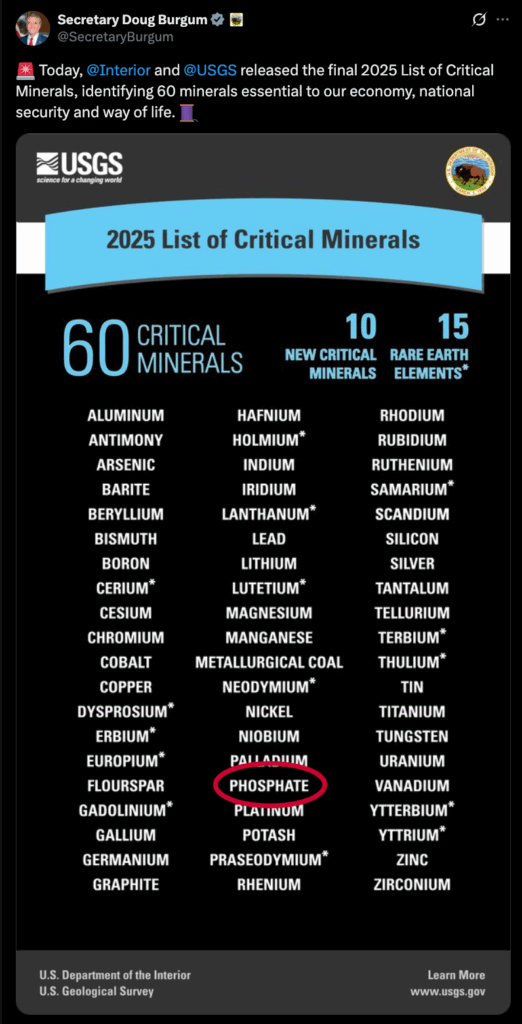
Phosphate has officially been added to the U.S. Critical Minerals List.
It’s official: the U.S. Department of the Interior has added phosphate to the nation’s Critical Minerals List — a major step forward for America’s food security and resource independence.
The new designation signals that policymakers now see phosphate not just as a crop nutrient, but as a strategic resource essential to national resilience.
“This updated list provides a clear, data-driven road map to reduce our dependence on foreign adversaries, expand domestic production, and unleash American innovation,” said Interior Secretary Doug Burgum.
Source: @SecretaryBurgum on X/Twitter
Why it matters:
Phosphate supports the systems that feed people and power economies. With this new designation, it joins a list of 60 materials recognized as essential to the nation’s strength and stability.
What it means:
- Food security: Farmers rely on phosphate to grow more food on less land. Without it, yields would be cut in half.
- Stronger U.S. supply chains: Two-thirds of North America’s phosphate comes from domestic producers.
- Less dependence abroad: This designation paves the way for investment in homegrown production and innovation.
- Future innovation: Phosphate byproducts contain valuable elements used in EVs, clean energy, and advanced computing.
The Big Picture: This move is part of a broader national effort to identify the minerals America needs most; for food, energy, and technology. Phosphate’s inclusion underscores that agriculture, like defense and industry, depends on secure, sustainable access to critical resources.
Read more in Roll Call: Interior adds phosphate, potash to final critical minerals list (11/6/25)